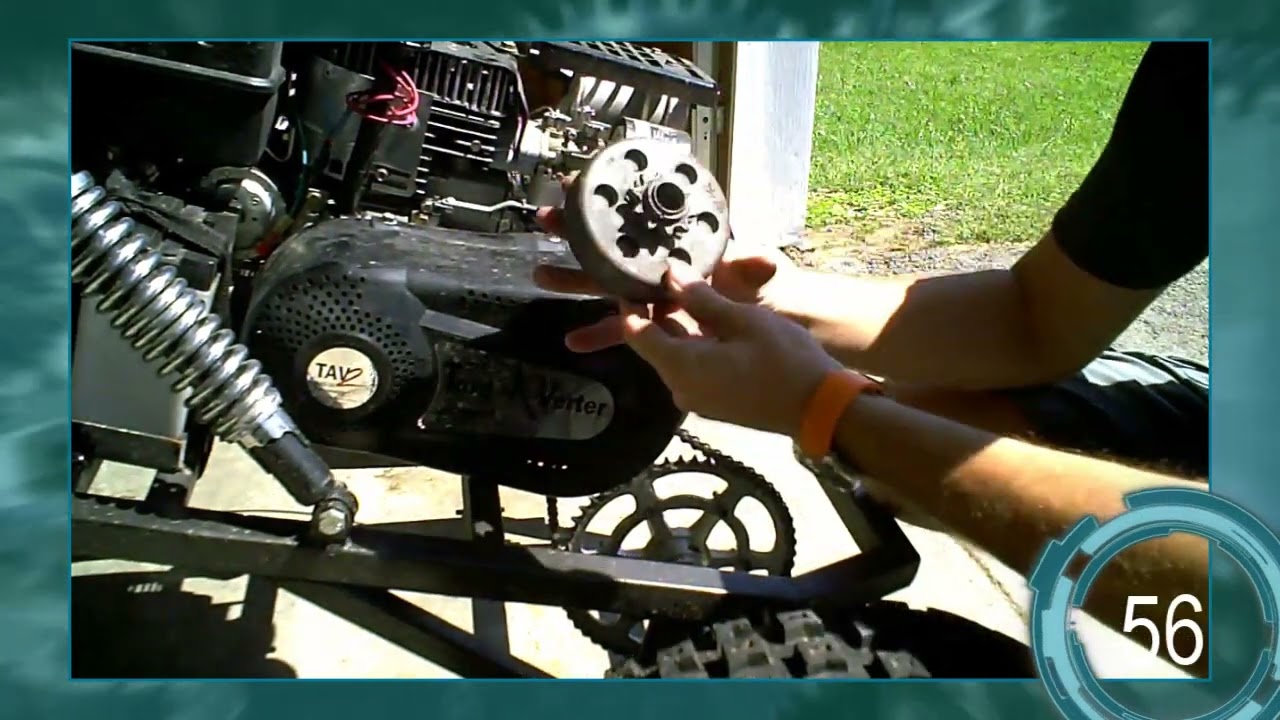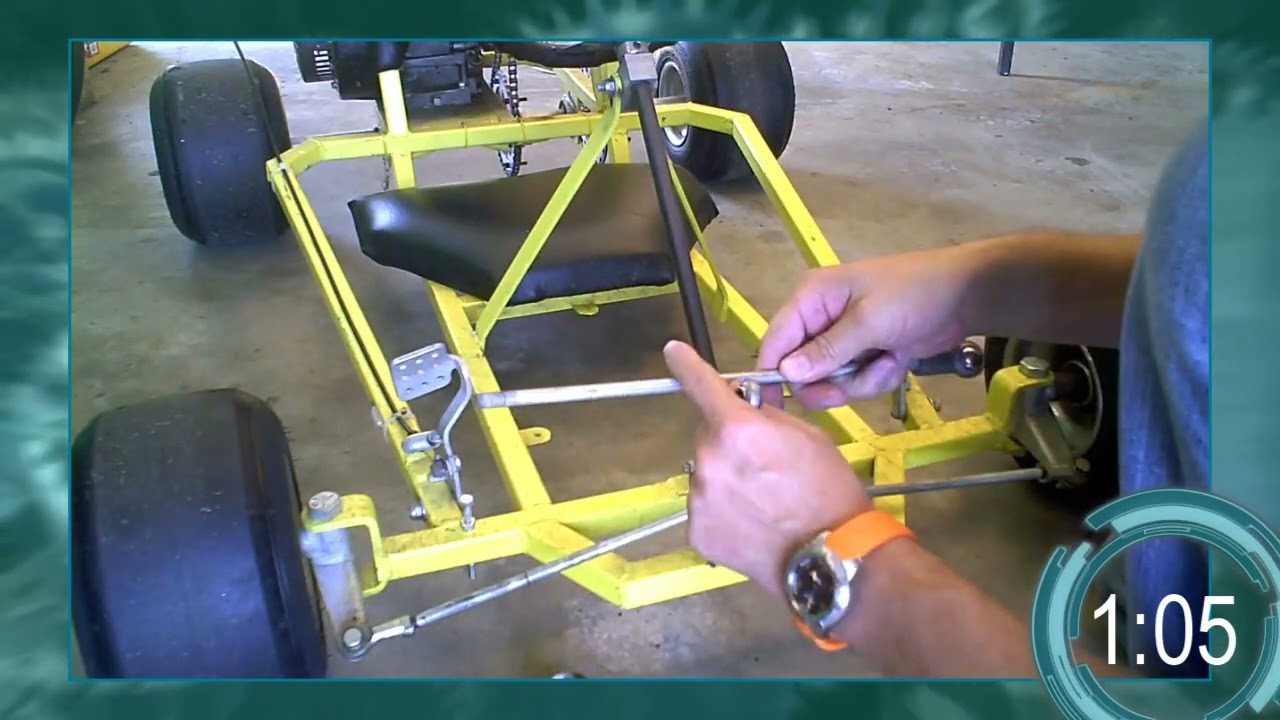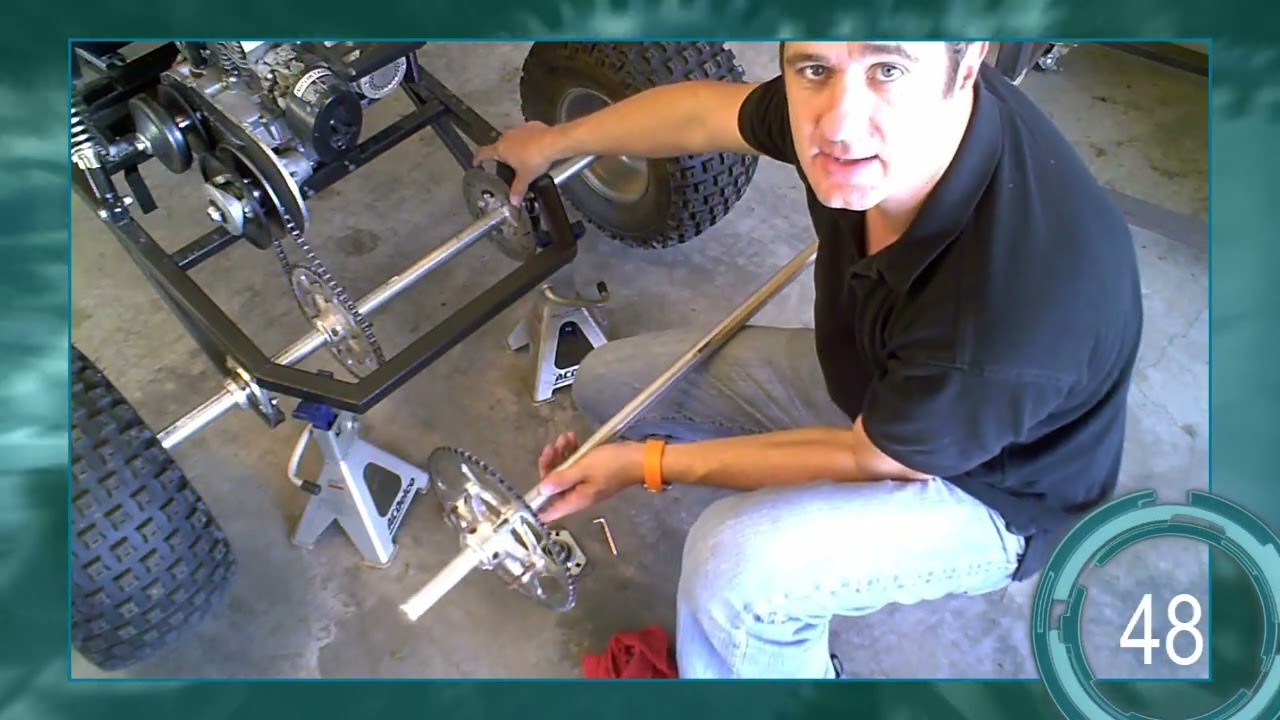
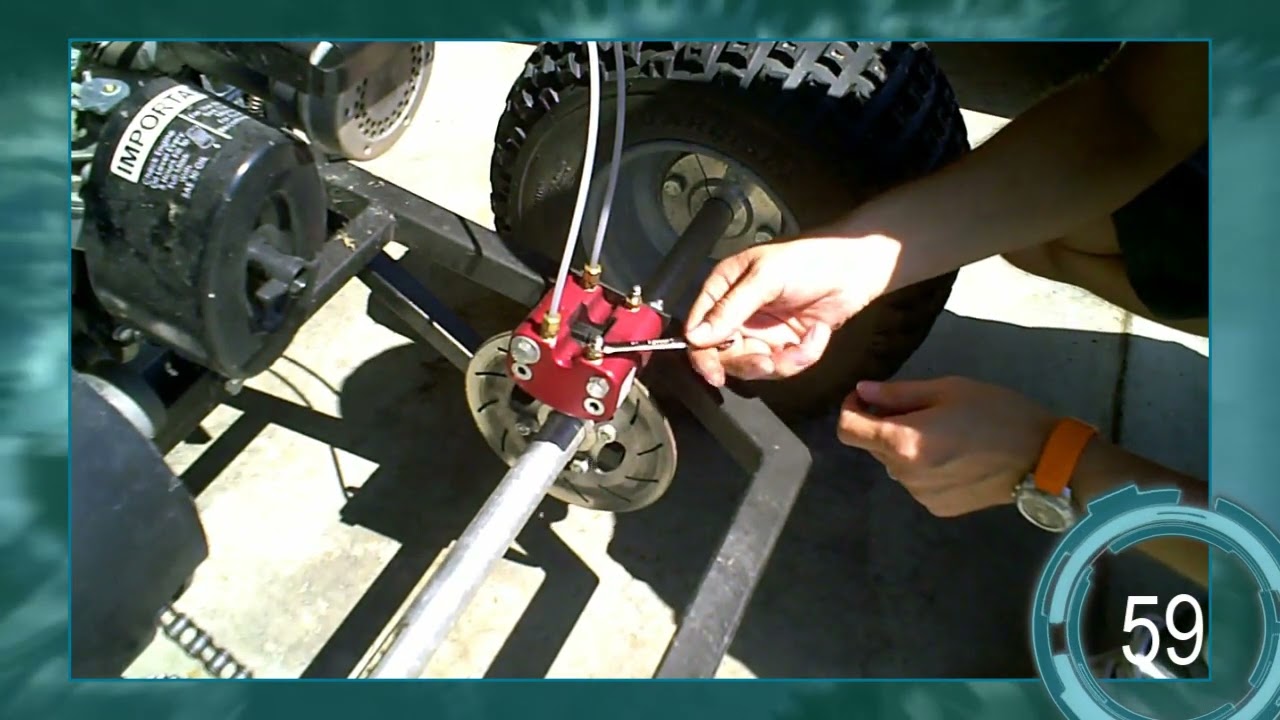
A go kart has one brake. It acts on the rear wheels. The SpiderCarts plans use three kinds: a band brake, a mechanical disc brake and a hydraulic disc brake. This guide shows how each one works, which plan uses which, how to mount a disc brake and how to bleed a hydraulic one. Robert Dicken shows the bleeding sequence in the video above and the disc brake parts in the second video below.
How each kind of brake works
- Band brake. A steel band wraps around a drum that turns with the axle. The pedal pulls the band tight on the drum. It is the cheapest brake and the plans use it on the two lightest karts.
- Mechanical disc brake. A disc, also called a rotor, turns with the axle. A caliper with a lever sits over the disc. A brake rod runs from the pedal to the lever. When you press the pedal, the rod pulls the lever, the lever pushes a pin, and the pin pushes the brake pad into the disc.
- Hydraulic disc brake. The pedal pushes a master cylinder at the front of the kart. Brake fluid runs through the brake lines to the caliper and squeezes the pads onto the disc, the same way a car brake works. It needs no brake rod, and it stops a heavy kart with less pedal force.
The pads are the wear part on both disc brakes. Some sellers call them brake pucks. Check them when the brake starts to feel weak, and replace them before they wear down to the metal.
Which brake each plan uses
| Kart | Brake | Rear axle | Brake parts in the plan's parts list |
|---|---|---|---|
| Itzy Bitzy | Band | No live axle | 6" band brake, 6" brake drum, brake rod |
| BlackWidow | Band | 1" x 40" | Your choice of brake parts that fit a 1" axle |
| Recluse | Disc | 1" x 36" | 1" billet brake kit |
| Scorpion | Hydraulic disc | 1" x 18" | 1" high performance hydraulic brake kit |
| Tarantula | Hydraulic disc | 1 1/4" x 40" | 1 1/4" hydraulic brake kit |
| Arachnid | Hydraulic disc | 1 1/4" x 45" | 1 1/4" hydraulic brake kit, 5 ft of plastic brake line |
| GrandDaddy | Hydraulic disc | 1 1/4" x 45" | 1 1/4" hydraulic brake kit, 5 ft of plastic brake line |
Buy the brake kit for your axle size. The disc hub has to fit the axle, so a 1" kit will not go on a 1 1/4" axle. Every kart with suspension uses a hydraulic brake. The GrandDaddy carries two riders.
Mount the disc and the caliper
- Bolt the disc to its hub.
- Slide the hub onto the axle. Line up the keyway in the hub with the keyway in the axle, put the key in, and tighten the set screw.
- Do this before the axle goes through the bearings. The rear axle guide shows the order for every part on the axle.
- Weld a bracket to the frame for the caliper. Place it so the caliper sits square over the disc and the disc runs in the middle of the caliper without rubbing.
- Run the brake rod or the hydraulic line from the caliper to the pedal.
Make a brake rod
A band brake or a mechanical disc brake needs a brake rod between the pedal and the brake lever. You can make one. Buy a length of steel rod, bend one end, and put a pin through the bend at the brake lever. Connect the other end to the pedal. When the pedal goes down, the rod pulls the lever.
How to bleed hydraulic go kart brakes
Air in the lines makes the pedal soft, because air squeezes and brake fluid does not. Bleeding pushes the air out through the bleeder valves on the caliper. It takes two people: one at the pedal and one at the caliper.
- The person at the pedal pushes the brake pedal down and holds it.
- The person at the caliper opens one bleeder valve. Air, or air and fluid, comes out.
- Close the bleeder valve.
- Only then does the person at the pedal let the pedal up.
- Do it again until only fluid comes out, with no air. Then do the same at the bleeder valve on the other side.
The order matters. If the pedal comes up while the valve is open, the master cylinder pulls air back into the line. Keep fluid in the master cylinder while you work so it never runs dry.
Check the brake before you drive
Lift the rear of the kart so the wheels are off the ground. Press the pedal hard and try to turn a rear wheel by hand. It should not move. Let the pedal up and turn the wheel again. It should turn freely, with no rubbing from the pads. If the pedal sinks slowly under steady pressure, look for a leak. If it feels soft, bleed the brakes again.
Video: how a disc brake works
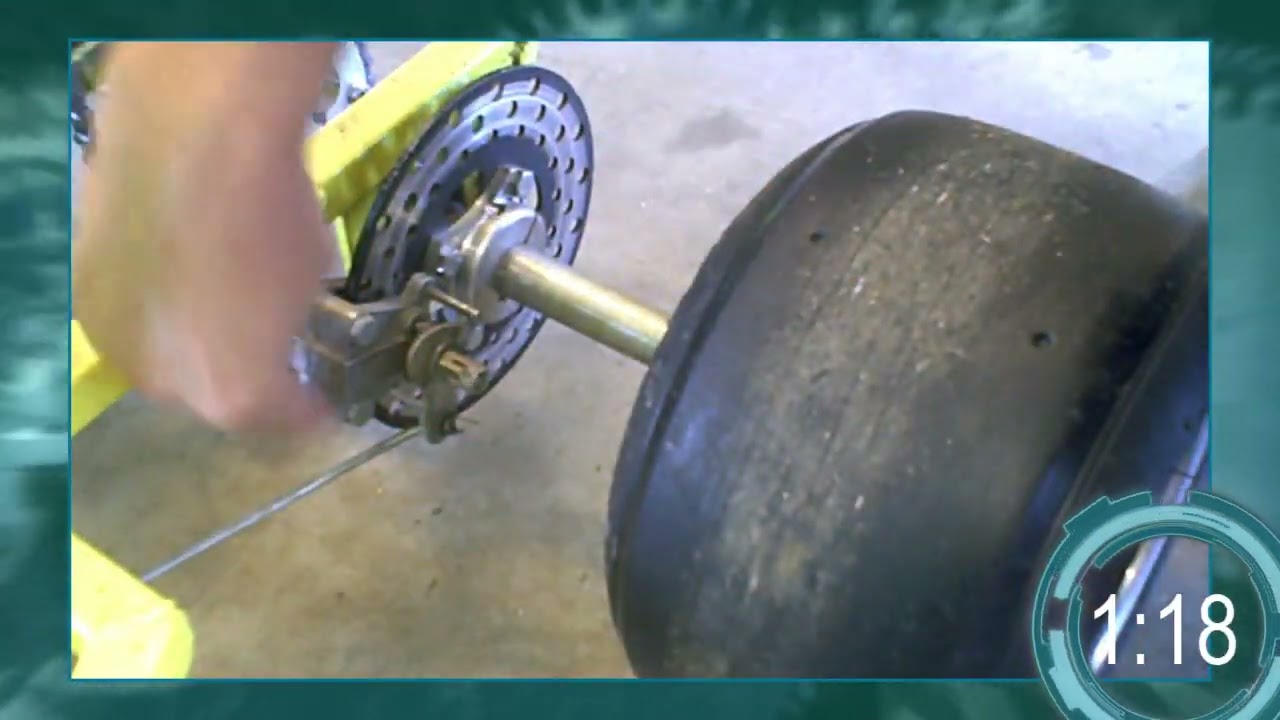
Robert shows a mechanical disc brake from the plans: the disc and its hub on a keyed axle, the caliper lever, and a brake rod made from a bent rod and a pin.